
When it comes to ideas for hanging pots and pans on wall, the best solutions combine function and style. We’re talking sturdy racks, smart layouts, and space-saving hacks that keep your most-used cookware within easy reach. From wall-mounted rails to repurposed ladders, there’s a method that fits every kitchen size and design.
In our experience, the most effective ideas for hanging pots and pans on wall setups start with knowing your cookware’s weight and usage. We recommend placing frequently used items at eye level and heavier pots lower down. We’ve tested layouts in real kitchens and found that accessibility and balance make all the difference in daily cooking flow.
Here’s a tip most guides miss: Always anchor hardware into wall studs, not just drywall toggles—even for lighter racks. We’ve seen too many racks pull loose after months of use. A secure mount means your pot and pan storage stays safe, especially when you’re grabbing a skillet mid-stir.
The biggest mistake? Assuming all ideas for hanging pots and pans on wall work for every kitchen. Overcrowding racks or hanging delicate copperware in high-splash zones leads to damage and frustration. We’ve learned that matching your setup to your cooking habits and kitchen layout prevents clutter, not creates it.
Ready to transform your kitchen? Below, we break down the smartest, most practical ways to organize your pots and pans on the wall—complete with pro tips and creative hacks you won’t find anywhere else.
In This Guide
- 7 Clever Ways to Hang Pots and Pans on Your Wall
- Wall-Mounted Pot Racks That Keep Your Kitchen Tidy
- Pegboard Magic: Customize Your Pot and Pan Storage
- Over-the-Range Solutions for Small Kitchens
- Best Hardware for Securing Heavy Cookware
- Quick Comparison: Pot and Pan Hanging Options
- Creative Upcycles: Turn Old Items into Hanging Racks
- How to Arrange Pots and Pans for Easy Access
7 Clever Ways to Hang Pots and Pans on Your Wall
When counter space is tight, hanging pots and pans on the wall instantly frees up room and adds visual interest. We recommend starting with a simple ceiling-mounted pot rack if you have high ceilings—these can hold up to 20 pounds and keep heavy stockpots off the stove. Magnetic strips work surprisingly well for lightweight pans, especially near cooking zones.
Just ensure your knife storage isn’t compromised.
A wall-mounted ladder rail with S-hooks offers flexibility—adjust hook spacing for Dutch ovens or sauté pans. In our experience, positioning it near a window keeps the area well-lit and accessible. Another favorite: repurposed wooden ladders leaned against the wall, though anchoring is essential for safety. These work best in farmhouse or rustic kitchens.
Don’t overlook door-mounted racks—they’re ideal for pantry or cabinet doors and maximize dead space. We found models with adjustable tiers hold up to six pots. Under-cabinet baskets are another smart pick, especially in rentals where drilling isn’t allowed. For a bold look, try a statement pendant rod suspended from an island—pair with copper cookware for a striking display.
Wall-Mounted Pot Racks That Keep Your Kitchen Tidy
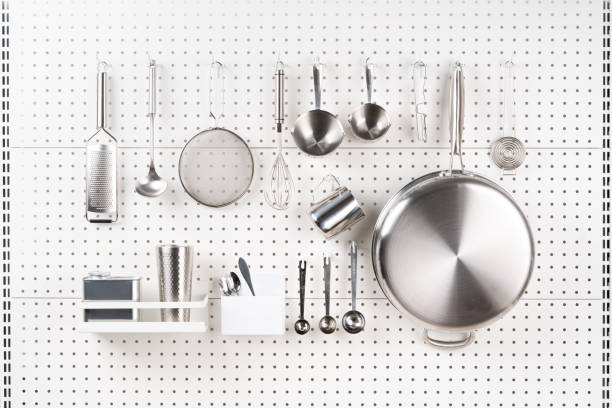
Wall-mounted pot racks are a game-changer for organizing bulky cookware without sacrificing style. We suggest choosing racks made from stainless steel or powder-coated iron—they resist rust and support up to 30 pounds when properly anchored. Position them within arm’s reach of your stove for seamless cooking flow. Avoid placing them above gas burners for safety.
Linear racks fit snugly in narrow spaces, like beside a fridge or between cabinets. We found that a 48-inch model comfortably holds 8–10 standard pots with room for lids. Grid-style racks offer more hanging points and work well in larger kitchens. Use rubber-coated hooks to prevent pans from sliding and scratching.
For high-ceiling kitchens, consider a vertical tiered rack that stacks pots efficiently. These reduce horizontal sprawl and make lid storage easier. In our experience, pairing a wall rack with under-shelf baskets creates a complete storage ecosystem. Just ensure wall anchors match your wall type—toggle bolts for drywall, masonry anchors for brick.
Pegboard Magic: Customize Your Pot and Pan Storage
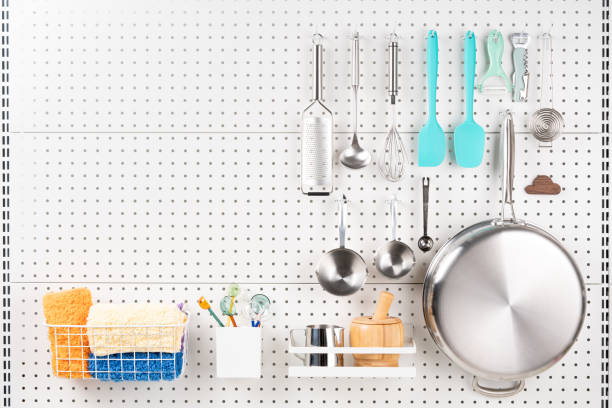
Pegboards aren’t just for garages—they’re a powerhouse solution for custom kitchen organization. We recommend using a tempered steel or acrylic pegboard in white or black to match your kitchen aesthetic. These resist moisture and won’t warp over time. Install it behind a cooking zone or on a blank wall for instant, flexible storage.
The real magic lies in customization: use J-hooks, basket inserts, and tool holders to arrange pots, pans, ladles, and even spice jars. We found that spacing pegs at 1-inch intervals offers maximum versatility. Heavy cast iron pans need reinforced hooks—look for ones rated for 5+ pounds each. Group frequently used items at eye level.
For a clean look, stick to a cohesive hook style and color. Add a small shelf on top for lids or trivets. In our experience, a 24 x 36-inch panel fits most standard walls and holds a full cookware set. Best of all, it’s easy to reconfigure as your collection grows—true modular storage at its finest.
Over-the-Range Solutions for Small Kitchens
When counter space is limited, we recommend maximizing vertical storage right above your stove. Over-the-range pot racks are ideal for small kitchens because they keep cookware within easy reach while freeing up cabinet space. Many models include built-in ventilation hoods, serving a dual purpose and meeting code requirements in some homes.
We’ve found that ceiling-hung pot racks work especially well in galley or studio kitchens where wall space is minimal. These typically use adjustable chains or rods, allowing you to set the height between 24 and 36 inches above the range for optimal safety and accessibility. Just ensure your ceiling can support the load with proper joist anchoring.
Another smart option is wall-mounted racks designed to fit within standard cabinet widths—usually 24 to 30 inches. These blend functionality with style and often include shelf space for spices or oils. In our experience, pairing the rack with under-cabinet lighting enhances visibility and gives the kitchen a professional, streamlined look.
Best Hardware for Securing Heavy Cookware
When hanging heavy pots and pans, the right hardware isn’t just helpful—it’s essential for safety. We suggest using lag screws with wall anchors rated for 50+ pounds when mounting racks into drywall. For brick or tile, toggle bolts or masonry anchors provide a much more secure hold, especially with cast iron or large stockpots.
Stainless steel hooks and rails consistently outperform cheaper alternatives. We’ve seen coated steel racks warp under the weight of a single Dutch oven, but 14-gauge stainless steel rails handle multiple heavy pans with no sagging. Look for systems that include rubberized contact points to prevent scratches on both cookware and walls.
Another often-overlooked detail is the spacing and depth of mounting brackets. We recommend placing brackets no more than 16 inches apart and ensuring they extend at least 3 inches from the wall to accommodate deep pots. Using a stud finder to anchor directly into wall studs adds an extra layer of security, especially in high-traffic kitchens.
Quick Comparison: Pot and Pan Hanging Options
| Option | Weight Capacity | Best For | Installation Difficulty |
|---|---|---|---|
| Over-the-Range Rack | Up to 75 lbs | Small kitchens, dual ventilation use | Moderate (wiring/lighting) |
| Ceiling-Mounted Rack | Up to 100 lbs | High ceilings, heavy cast iron | High (joist access needed) |
| Wall-Mounted Rail | Up to 50 lbs | Organized storage, frequent access | Low to Moderate |
| Island Pot Filler | Up to 60 lbs | Kitchen islands, decorative appeal | High (custom installation) |
Each hanging option brings unique strengths depending on your kitchen layout and cookware collection. We find that over-the-range racks offer the best balance of function and space-saving design, particularly in urban apartments where every inch counts. Their built-in lighting and ventilation add extra value beyond storage.
Ceiling-mounted racks stand out for high-load capacity, making them ideal if you frequently use large Dutch ovens or stockpots. While installation is more complex, the payoff is a dramatic centerpiece that keeps heavy items off countertops. We recommend them especially in kitchens with 9-foot or higher ceilings.
Wall-mounted rails are the most versatile and easiest to retrofit into existing spaces. With sleek profiles and modular hook systems, they adapt well to changing needs. In our experience, they’re the top choice for home chefs who want quick access without sacrificing wall aesthetics or requiring structural modifications.
Creative Upcycles: Turn Old Items into Hanging Racks
Transforming vintage or discarded items into functional kitchen hardware isn’t just eco-friendly—it adds character to your space. We’ve seen old bed frames, salvaged iron railings, and even wooden ladders repurposed into stunning pot racks. One of our favorite finds is using a retired wooden window sash with added hooks—its grid structure naturally organizes pots while serving as rustic wall art.
Industrial piping is another standout: a simple T-joint setup with floor flanges and black iron pipes creates a custom grid that’s both sturdy and stylish. We recommend pairing it with S-hook extenders to maximize hanging depth. Even an outdated silverware tray, mounted horizontally, can hold smaller pans and lids when reinforced with brackets.
Don’t overlook old cabinet doors or headboards—strip the paint for a farmhouse look or powder-coat metal grates for durability. In our experience, the most successful upcycles balance load capacity (aim for 20+ lbs per hook) with visual charm. Always anchor into studs or use toggle bolts—especially when suspending heavy cast iron.
How to Arrange Pots and Pans for Easy Access
Strategic arrangement starts with frequency of use. We suggest placing everyday items—like a 12-inch frying pan or 3-quart saucepan—within easy reach at waist to chest height. Less-used pieces, such as stockpots or Dutch ovens, can go higher or toward the ends of the rack. This keeps your workflow smooth and reduces strain during meal prep.
Grouping by type improves efficiency: cluster lids together on a dedicated rod or use lid clips to attach them to pot rims. Nest compatible pots to save space, but leave handles accessible. In our experience, leaving 2–3 inches between items prevents clanging and makes grabbing a pan hassle-free—even when wearing oven mitts.
Consider weight distribution—place heavier cast iron or roasting pans near support brackets to prevent sagging. We recommend arranging items by size in a gradient, either left to right or top to bottom, for visual balance. A well-organized rack isn’t just functional; it turns your cookware into a kitchen centerpiece.
Frequently Asked Questions
What is the best way to hang pots and pans on a wall?
We recommend using a wall-mounted pot rack with sturdy hooks or a horizontal rod system. Install it near a cooking area but away from heat sources. We’ve found that ceiling-high cabinets or open shelving with S-hooks also work well. Always anchor hardware into studs or use heavy-duty drywall anchors to support weight and prevent damage.
How high should a pot rack be hung above the island?
For safety and accessibility, we suggest mounting a pot rack 30 to 36 inches above the countertop or island surface. This height allows easy access while preventing head bumps. In our experience, taller users may prefer the upper end of that range. Always consider the cook’s height and the size of your largest pots to maintain clearance.
Can I hang pots and pans on any wall?
Not all walls are suitable. We recommend choosing a wall with studs that can support heavy loads. Avoid exterior or poorly insulated walls if you live in extreme climates. We’ve found that walls near cooking zones work best but should be kept clear of open flames. Always use a stud finder and secure hardware properly for safety.
What types of pots and pans are safe to hang?
We suggest hanging lightweight to medium-weight cookware like stainless steel, copper, or enameled pots. Avoid hanging non-stick pans long-term, as hanging can damage coatings. In our experience, cast iron is best stored on shelves or stands unless using a heavy-duty rack. Always ensure handles are secure and balanced when suspended.
Do wall-mounted pot racks save kitchen space?
Yes, we’ve found that wall-mounted pot racks free up significant cabinet and countertop space. By moving bulky cookware off shelves, you improve kitchen flow and accessibility. In our experience, open storage encourages organization and keeps frequently used items within reach, making meal prep faster and more efficient.
Final Thoughts
We believe hanging pots and pans on the wall is more than a storage solution—it’s a way to bring function and style into your kitchen. With the right hardware and placement, you can create an organized, accessible space that reflects your cooking habits. We’ve seen how thoughtful setups transform cluttered kitchens into streamlined, inviting areas.
Now that you have practical ideas and answers to common concerns, we encourage you to assess your kitchen layout and start small. Choose one wall or rack style that fits your space and test it out. In our experience, even a simple change can make a big difference in daily cooking ease and kitchen enjoyment.