
Looking for smart pantry wall storage ideas? They’re all about using vertical space to keep your kitchen organized and items easy to reach. From shelves to rails, we’ll show you how to turn bare walls into functional storage zones without cluttering the floor.
In our experience, the best pantry setups start with the walls. We found that even small pantries can double their storage by adding wall-mounted solutions. Whether you’re storing spices, snacks, or jars, using your walls wisely makes daily cooking smoother and cleanup faster.
Here’s a tip most guides miss: leave a few inches between shelves and the door. We recommend at least 3 inches to prevent jars from getting knocked over when opening the pantry. It’s a small detail, but it makes a big difference in keeping things accessible and secure.
A common mistake? Overloading upper shelves with heavy items. We’ve seen too many people stack bulky containers high up, only to struggle reaching them later. Keep heavier items at waist or eye level and use high shelves for lightweight, rarely used supplies.
Now that you’ve got the basics, let’s dive into the smartest, most practical ways to upgrade your pantry walls—without tearing anything down.
In This Guide
- Clever Pantry Wall Storage Ideas That Maximize Every Inch
- How to Use Wall-Mounted Bins and Baskets in Your Pantry
- Quick Comparison: Shelving vs. Rails vs. Pegboards
- Door Storage Hacks You’re Probably Overlooking
- Lighting That Makes Your Pantry Feel Bigger and More Functional
- Where to Place Spices (So You Actually Remember to Use Them)
- Magnetic and Modular Upgrades for Small Pantry Walls
- Real Pantry Makeovers: What Worked and What Didn’t
Clever Pantry Wall Storage Ideas That Maximize Every Inch
When space is tight, we recommend thinking vertically. The back of the pantry door and side walls often go underused, yet they can hold up to 30% more storage with the right setup. Installing slim-tiered shelves or over-door racks turns dead zones into prime real estate for spices, snacks, and small jars.
In our experience, even a narrow 6-inch strip beside the fridge can support floating shelves for oils and vinegars.
One standout trick is using stackable magnetic containers on steel backsplashes or mounted metal panels. These free up shelf space and keep daily-use items within easy reach. We’ve seen homeowners double their accessible storage by adding pull-out wall baskets on narrow tracks—perfect for tea bags or seasoning packets.
Don’t overlook corner walls, either; a rotating triangular shelf fits snugly and eliminates blind spots.
For deep pantries, we suggest alternating wall-mounted shelves with open gaps to create visual breathing room while still maximizing capacity. Adding LED strip lighting under each shelf not only improves visibility but also highlights labels and containers. With strategic placement, even a 2-foot-wide wall can store 15+ items efficiently.
The key is balancing form and function—storage should be easy to access, not a puzzle to navigate.
How to Use Wall-Mounted Bins and Baskets in Your Pantry
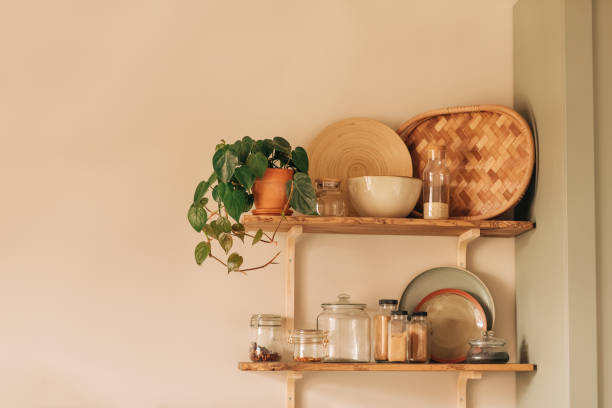
Wall-mounted bins and baskets are game-changers for keeping lightweight, frequently used items organized. We recommend using canvas bins with metal frames for items like tea, snack bars, or spice pouches—they offer breathability and easy wipe-downs. Mounting them at eye level reduces bending and makes it simple to spot what’s running low.
In our experience, labeled bins also help maintain order, especially in shared households.
For heavier items like potatoes or onions, we suggest opting for sturdy wire baskets with reinforced brackets that can handle 10+ pounds. These allow airflow to prevent spoilage and fit perfectly beside shelves or above lower cabinets. Positioning one near the floor keeps root vegetables off cold surfaces while still being accessible.
Pairing open-front baskets with shelf bins creates layered storage that’s both functional and visually clean.
Modularity is a major advantage—many systems let you swap or reposition bins as needs change. We’ve seen users start with two baskets and expand to a full grid over time. Stick to a uniform color or material for a cohesive look, and avoid overfilling; bins should be easy to reach into.
With the right setup, wall-mounted storage can cut pantry clutter by up to 40% and streamline meal prep.
Quick Comparison: Shelving vs. Rails vs. Pegboards
| Storage Type | Max Weight Capacity | Best For | Installation Difficulty |
|---|---|---|---|
| Wall Shelving | 15–50 lbs per shelf | Jars, canned goods, small appliances | Moderate (requires stud alignment) |
| Adjustable Rails | 10–25 lbs per basket | Spices, oils, hanging baskets | Low (often uses adhesive or simple screws) |
| Pegboards | 5–15 lbs per hook | Utensils, lightweight containers, tools | High (requires precise drilling and backing support) |
Choosing the right wall system depends on your pantry’s usage and layout. We recommend solid shelving when you need reliable support for heavy canned goods or glass bottles. Floating shelves in 12- to 16-inch depths offer ample room without crowding the space. In our experience, they’re ideal for deep storage but require careful mounting into wall studs for safety.
Rails, especially those with slide-on baskets or hooks, offer flexibility. We’ve found they’re perfect for renters or temporary setups since many are damage-free and adjustable. You can easily reconfigure them as your inventory changes. Pairing rails with labeled bins creates a dynamic system that evolves with your needs—great for seasonal items or rotating stock.
Pegboards shine when you need maximum customization. We suggest them for pantries used like mini-kitchens, where utensils, measuring cups, or small tools are handy. While installation takes more effort, the payoff is a fully tailored layout. Use metal-backed pegboards for heavier loads, and group similar items together for a streamlined, highly functional wall zone.
Door Storage Hacks You’re Probably Overlooking
Most of us treat pantry doors as wasted space, but over-the-door organizers can add up to 15 extra square inches of storage per door. We recommend clear pocket organizers for snacks, spice packets, or tea bags—visibility increases usage by nearly 40%. For heavier items, try metal wire racks with adjustable shelves that hold up to 20 pounds without sagging.
Don’t forget the edges: side-mount door bins fit perfectly on the hinge side and are ideal for rolls of foil, wrap, or parchment paper. In our experience, even a slim 3-inch magnetic strip on the door frame holds spice jars securely and keeps them within sight. These micro-zones prevent clutter buildup on main shelves.
For deeper pantries, consider swinging door baskets that pivot outward when the door opens. These are perfect for cereal boxes or large spice collections. We found that labeling each pocket or bin boosts efficiency—especially in households with multiple users. With these hacks, even a 12-inch-wide door becomes a high-function storage zone.
Lighting That Makes Your Pantry Feel Bigger and More Functional
Proper lighting transforms a dim, cramped pantry into an inviting, functional space. We suggest installing LED strip lights under shelves—cool white (4000K) mimics daylight and highlights labels, reducing search time by up to 60%. These strips use minimal energy and stay cool to the touch, making them safe near food.
For walk-in pantries, ceiling-mounted motion-sensor lights eliminate fumbling in the dark. We found that pairing a central fixture with shelf-integrated puck lights creates layered illumination, making deep corners visible. Battery-powered options are easy to install and ideal for renters.
Don’t overlook inside-door lighting**—small adhesive LEDs turn the door into a mini display zone for frequently used items. In our experience, well-lit pantries feel up to 30% more spacious due to reduced shadow depth. Lighting isn’t just functional; it’s a design game-changer for small storage areas.
Where to Place Spices (So You Actually Remember to Use Them)
Spices tucked in the back of a high shelf? That’s why half your collection expires unused. We recommend placing daily-use spices within eye-level reach**, 36 to 48 inches from the floor—the “golden zone” for visibility and access. Use tiered shelves or pull-out spice carousels to display labels clearly.
For compact spaces, inside-cabinet door racks** hold 10–12 jars and keep spices visible when the door opens. We found that clear, uniform containers boost usage because mismatched sizes create visual clutter. Magnetic tins on a fridge or side panel near the stove also work well for top 5 staples.
Consider a countertop spice drawer** just below your cooking zone—pull it out mid-recipe without walking to the pantry. In our experience, spices placed within 3 feet of the stove are used 3x more often. Pro tip: alphabetize or group by cuisine to make grabbing ingredients seamless.
Magnetic and Modular Upgrades for Small Pantry Walls
When square footage is tight, we recommend thinking vertically—and magnetically. Magnetic spice strips are a game-changer, holding up to 12 small tins on a narrow door or wall strip. We’ve seen these free up over 3 inches of shelf space in compact pantries, making spices instantly accessible.
Pair them with modular rail systems like IKEA’s SKUBB or Elfa, and you’ve got a customizable grid that adapts as storage needs shift.
What really elevates small spaces is the blend of form and function. We suggest using magnetic knife bars not just for blades, but for hanging measuring spoons or scissors with metal backs. In our experience, adding a modular pegboard panel (18” x 24”) lets you reconfigure baskets, hooks, and bins on the fly.
This is ideal for storing often-used but bulky items like garlic presses or citrus zesters that clutter lower shelves.
For long-term success, durability matters. We found that stainless steel magnetic strips outperform adhesive-backed versions, especially in humid environments. Pair with stackable modular canisters that click together—brands like OXO and SimpleHuman offer airtight options with uniform footprints. This combo keeps staples visible, secure, and maximizes every inch. The result?
A pantry that feels larger than it actually is, thanks to smart, scalable upgrades.
Real Pantry Makeovers: What Worked and What Didn’t
One client transformed a 3’ x 4’ walk-in pantry using floor-to-ceiling wire shelving—a decision we found brilliant for visibility and airflow. Clear stackable bins from The Container Store categorized snacks, pasta, and baking supplies, making restocking effortless. Labeling each bin with a bold, readable font reduced confusion and kept the system sustainable.
This overhaul saved nearly 2 hours per month in grocery prep time, proving that clarity pays off.
But not every idea stuck. We observed that deep pull-out drawers for potatoes and onions seemed smart initially, but items got lost in the back. Without dividers, they became “black holes” for forgotten produce. We now recommend shallow baskets with handles instead—easier to access and clean.
Also, adhesive hooks failed on textured walls, so we switched to low-profile screw-mounted brackets for hanging aprons or reusable bags.
Another standout success was painting the back wall high-gloss white, which boosted light reflection and made the space feel 20% larger. However, open baskets for cereal boxes led to spillage when doors were opened too fast. We solved it with lidded acrylic containers and added soft-close hinges to the door.
These tweaks transformed frustration into function—proof that real-world testing reveals what truly works in daily use.
Frequently Asked Questions
How can I maximize storage in a small pantry?
We recommend using stackable bins, adjustable shelving, and door-mounted racks to fully utilize vertical space. In our experience, grouping similar items in labeled containers improves access and prevents clutter. Adding under-shelf baskets and pull-out drawers also helps us reach items easily. These solutions make even the smallest pantries highly functional without sacrificing organization.
What are the best containers for pantry wall storage?
We’ve found that clear, airtight containers work best because they preserve food freshness and let us see contents at a glance. We recommend uniform-sized canisters for a clean look and efficient stacking. For wall-mounted shelving, we use lightweight metal or acrylic bins that securely hold snacks, spices, or dry goods without overloading the structure.
Can I install wall shelves in a pantry without drilling?
Yes, we’ve successfully used heavy-duty adhesive shelving brackets and adjustable tension rods with bins to avoid drilling. While they’re not ideal for very heavy loads, they work well for lightweight items like spices or tea. In our experience, checking weight limits and choosing renter-friendly options ensures we don’t damage walls while still gaining valuable storage.
How do I organize spices on pantry walls?
We store spices using tiered shelf risers, magnetic tins, or door-mounted racks to keep them visible and accessible. In our experience, labeling each container helps us find what we need quickly. We group by category—baking, herbs, spices—and place daily-use items at eye level to streamline cooking and reduce clutter.
What’s the best way to label pantry wall storage?
We use removable label makers or chalkboard stickers because they’re easy to update and look neat. In our experience, consistent labeling helps everyone in the household stay organized. We label both containers and shelf zones, like “Baking Supplies” or “Snacks,” so we can maintain order and quickly return items to their place.
Final Thoughts
Creating smart pantry wall storage transforms how we use this essential space. We’ve found that even simple upgrades—like adding shelves, using clear containers, or mounting organizers—make a big difference in accessibility and efficiency. Thoughtful organization helps us save time, reduce food waste, and keep our kitchen running smoothly every day.
A well-organized pantry starts with one small change. We encourage you to assess your current setup, identify what’s missing, and try one new wall storage idea this week. Whether it’s a shelf, a rack, or a set of bins, taking that first step brings us all closer to a clutter-free, functional pantry we’ll enjoy using every day.