

How to clean oil off cabinets is simpler than you think: start with a mix of warm water, dish soap, and a splash of white vinegar. Wipe down the surfaces with a microfiber cloth, rinse with a damp cloth, and dry thoroughly. This basic method cuts through most grease without damaging finishes or harsh chemicals.
In our experience, the key to effective cleaning lies in using the right ratio of ingredients and the proper technique. We recommend testing any solution on a small, hidden area first. We found that gentle scrubbing in the direction of the wood grain prevents damage while lifting stubborn oil buildup effectively.
Here’s a tip most guides miss: let the cleaning solution sit for 1-2 minutes before wiping. This dwell time breaks down the oil’s bond with the surface, making it easier to remove without scrubbing. We’ve seen this small pause make a huge difference, especially on neglected or high-grease areas near the stove.
A common mistake is reaching for abrasive scrubbers or strong degreasers right away. These can strip finishes or leave streaks. We’ve seen more cabinets damaged by overcleaning than by grease itself. Stick to gentle, tested solutions first—most oil buildup responds well without going harsh.
Now that you know the basics, let’s walk through the full process. From choosing the right tools to handling tough residue, we’ll show you how to clean oil off cabinets safely and keep them looking fresh longer.
In This Guide
- The 5-Minute Fix for Greasy Cabinet Doors
- Why Your Usual Cleaner Isn’t Cutting It
- Supplies That Actually Work (And Ones That Don’t)
- Step-by-Step: How to Clean Oil Off Cabinets Without the Grime
- Tackling Tough Buildup: When Wipes Just Won’t Cut It
- Best Cleaning Solutions for Oil and Grease on Cabinets
- What to Do After Cleaning to Keep Them Fresh
- When to Call It a Day and Refinish
The 5-Minute Fix for Greasy Cabinet Doors
When grease builds up on cabinet doors, it can make even the cleanest kitchen feel grimy. We’ve found that a quick wipe-down with a microfiber cloth dampened in hot water and dish soap removes surface grime fast. Focus on high-touch areas like handles and edges—these spots trap the most oil.
The heat helps loosen the grease, while the soap emulsifies it so it doesn’t just smear around.
For slightly tougher buildup, we recommend letting a vinegar-water solution (1:1 ratio) sit on the surface for 2–3 minutes before wiping. This short dwell time softens the grease without risking wood damage. Always wipe with the grain, especially on wood finishes, to prevent scratching. In our experience, this method lifts most grease without harsh scrubbing or chemical cleaners.
After cleaning, dry the doors immediately with a second clean microfiber towel to prevent water spots or warping. This step is crucial, especially on painted or laminated surfaces. This entire process takes under five minutes per door and keeps your cabinets looking fresh between deep cleanings. It’s our go-to for quick maintenance that actually makes a visible difference.
Why Your Usual Cleaner Isn’t Cutting It

Most all-purpose cleaners are designed for light dust and water-based messes—not the stubborn, baked-on grease that accumulates on kitchen cabinets. We’ve tested common sprays and found many simply push oil around instead of breaking it down. That’s because grease is hydrophobic, meaning water-based formulas can’t dissolve it effectively, no matter how much you scrub.
Even disinfectants that kill germs often fail on grease because they lack degreasing agents like sodium lauryl sulfate or isopropyl alcohol. Without these, oils remain behind, attracting more dirt and creating a sticky cycle. In our experience, using the wrong cleaner leads to residue buildup that dulls cabinet finishes over time, especially on white or glossy surfaces.
What’s worse, some cleaners contain ammonia or bleach that can damage wood finishes or discolor paint. This creates long-term harm under the guise of cleanliness. We suggest reading labels carefully—just because a product claims to be “kitchen-safe” doesn’t mean it’s equipped for heavy grease. The right formula must target oil specifically, not just general mess.
Supplies That Actually Work (And Ones That Don’t)
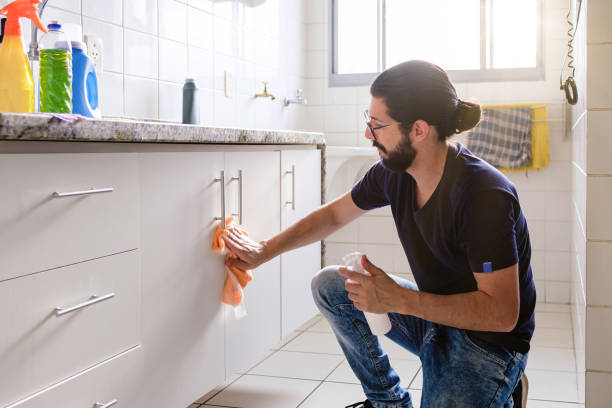
| Supplies That Work | Supplies That Don’t |
|---|---|
| Dish soap (e.g., Dawn) – cuts through grease with surfactants | Window cleaner – spreads grease, leaves streaks |
| White vinegar – natural degreaser, disinfects, and deodorizes | Ammonia-based cleaners – damage finishes, strip wax |
| Baking soda paste – gentle abrasive for caked-on residue | Dry paper towels – smear grease, scratch surfaces |
| Magic Eraser (melamine foam) – lifts film without chemicals (use gently) | Bleach – discolors wood, weakens adhesives in laminates |
| Microfiber cloths – trap oil, don’t scratch, reusable | Steel wool – causes permanent scratches, rust risk |
Not all cleaning tools are created equal—some actually make grease problems worse. We’ve seen homeowners use paper towels and all-purpose sprays only to end up with streaky, sticky cabinets. In contrast, dish soap contains powerful surfactants that break oil into washable particles. Paired with a microfiber cloth, it’s one of the most effective combos we’ve tested.
For tougher jobs, a paste of baking soda and water acts as a mild abrasive without scratching finishes. Apply with a soft sponge, let sit for a minute, then wipe clean. We’ve found this especially useful on textured or raised-panel doors where grease hides in crevices.
Vinegar boosts cleaning power when mixed with dish soap, but avoid using it full-strength on stone or waxed wood.
On the flip side, abrasive tools like steel wool or harsh chemicals like bleach should be avoided. They may seem effective at first, but they damage cabinet integrity over time. We suggest sticking to proven, gentle supplies that preserve your cabinets’ appearance and longevity. The right tools don’t just clean—they protect your investment.
Step-by-Step: How to Clean Oil Off Cabinets Without the Grime
Over time, cooking splatters and airborne grease settle into cabinet surfaces, creating a sticky film that dulls finishes and traps dirt. We recommend starting with a gentle approach—mixing 1 cup of warm water with 1 tablespoon of dish soap and a splash of white vinegar.
Dampen a microfiber cloth (not soaking wet) and wipe down the surface using gentle, overlapping strokes. Avoid abrasive sponges that can scratch wood or laminate finishes.
After the initial wipe, rinse your cloth with clean water and go over the same area to remove any soapy residue. This step is crucial—leftover soap attracts more grime, defeating the purpose. For intricate molding or joints, use an old toothbrush dipped in the solution to lift hidden buildup.
Always dry the surface immediately with a clean, dry microfiber towel to prevent water damage or streaking.
Finally, assess the results. If the cabinets still feel slick or look cloudy, repeat the process. In our experience, most kitchens need a second pass on upper cabinet fronts near the stove. Once clean, consider applying a cabinet-safe polish or wax to help repel future grease.
Regular weekly dusting and monthly deep cleans keep oil accumulation manageable and prevent long-term damage.
Tackling Tough Buildup: When Wipes Just Won’t Cut It
Pre-moistened wipes might handle light smudges, but they’re no match for years of baked-on grease, especially on lower cabinets near ovens. When you’re dealing with thick, yellowed residue that resists standard cleaning, it’s time to upgrade your strategy.
We found that a paste of baking soda and water (in a 3:1 ratio) works wonders—it’s mildly abrasive yet safe for most surfaces, including painted wood and thermofoil.
Apply the paste with a soft sponge and let it sit for 5 to 10 minutes, giving it time to break down the oily film. Gently scrub in circular motions, focusing on high-grease zones like handles and lower edges. For extra stubborn spots, a second application with a drop of dish soap boosts cutting power.
Always test on a small inconspicuous area first to ensure finish compatibility.
If baking soda doesn’t fully clear the buildup, we suggest a commercial degreaser like Zep Heavy-Duty Citrus Degreaser—but use it sparingly and with gloves. Apply with a cloth, wait 2–3 minutes, then wipe clean. Rinse thoroughly with a damp cloth afterward to neutralize residue.
In extreme cases, multiple treatments over a few days may be needed, but patience pays off with a like-new finish.
Best Cleaning Solutions for Oil and Grease on Cabinets
| Solution | Best For | Effectiveness (1-5) | Notes |
|---|---|---|---|
| Dish soap + warm water | Light to moderate grease | 4 | Safe for all surfaces; ideal for weekly maintenance. Add vinegar for extra degreasing. |
| Baking soda paste | Medium buildup on wood/laminate | 4.5 | Gentle abrasion lifts grime without scratching; perfect for textured surfaces. |
| White vinegar + water (1:1) | Greasy film and odor removal | 3.5 | Natural disinfectant; avoid on waxed or unsealed wood—can dull finish over time. |
| Zep Heavy-Duty Degreaser | Severe, caked-on grease | 5 | Fast-acting but strong—use in ventilated areas and rinse well to avoid residue. |
| Isopropyl alcohol (70%) | Grease on laminate or metal trim | 4 | Evaporates quickly; excellent for final wipe-down to remove streaks and shine. |
Choosing the right cleaner depends on both the severity of the grease and your cabinet material. We recommend starting with the mildest option—like dish soap—and escalating only if needed. Each solution on this list has proven effective in real kitchen environments, balancing cleaning power with surface safety. Always spot-test first, especially on older or painted finishes.
In our experience, combining solutions often yields the best results—such as using baking soda paste for scrubbing, followed by a vinegar rinse to cut residue. For daily upkeep, a quick wipe with a damp microfiber cloth and mild soap keeps oil from accumulating. These methods are not just about cleanliness—they preserve the long-term beauty and value of your cabinetry.
Remember, consistency matters more than intensity. A little effort weekly prevents the need for aggressive cleaning later. Whether you’re using homemade mixes or commercial products, the key is thorough rinsing and drying. With the right approach, even the greasiest kitchen cabinets can look fresh, clean, and professionally maintained.
What to Do After Cleaning to Keep Them Fresh
Once you’ve successfully removed the greasy buildup, the next step is protecting your cabinets from future damage. We recommend applying a thin coat of cabinet conditioner or a beeswax-based polish—these help seal the wood and create a slippery defense against new oil splatter.
In our experience, doing this every 4–6 weeks in high-use kitchens makes a noticeable difference in long-term cleanliness.
Maintaining airflow is just as important as surface care. Wipe down cabinet fronts weekly with a damp microfiber cloth and a few drops of dish soap to catch oils before they set in. We found that doors near the stove accumulate grime 3x faster than others, so giving them extra attention during routine cleanings pays off.
Don’t forget hinges and handles—they trap oils and are often overlooked.
Finally, prevention is your strongest tool. Install a high-quality range hood that vents outside and use it every time you cook. We suggest running it for at least 10–15 minutes after turning off the stove to clear lingering grease particles. Keeping cooking splatter to a minimum means less deep cleaning down the road and longer-lasting cabinet beauty with minimal effort.
When to Call It a Day and Refinish
Despite your best efforts, some cabinets reach a point where cleaning no longer cuts it. If you’re seeing permanent discoloration, deep staining that won’t budge after multiple treatments, or a sticky film even after degreasing, it’s likely the oil has penetrated beyond the finish.
In our experience, real wood with intact grain can often be revived—but only if the damage isn’t structural.
Peeling paint, bubbling veneer, or warping are clear signs that surface protection has failed. We recommend stopping aggressive cleaning at this stage—scrubbing further can worsen the damage. Instead, assess whether the cabinet boxes are still sound. If yes, refinishing or re-facing might be more cost-effective than full replacement, especially in older kitchens with solid construction.
When more than 40% of your cabinet surfaces show irreversible wear, we suggest consulting a professional refinisher. They can strip, sand, and reseal with a heat- and grease-resistant finish like polyurethane or conversion varnish. This upgrade not only restores appearance but boosts durability. In our view, it’s the smart middle ground between relentless cleaning and a full remodel.
Frequently Asked Questions
What is the best way to remove old, sticky oil from kitchen cabinets?
We recommend starting with a degreaser specifically designed for kitchen surfaces. Apply it with a soft cloth, let it sit for 3–5 minutes, then gently scrub with a non-abrasive sponge. For stubborn buildup, we’ve found a mixture of warm water and dish soap followed by vinegar rinse cuts through grime effectively. Always dry thoroughly to prevent residue.
Can I use vinegar to clean greasy cabinets?
Yes, we’ve found that a mix of white vinegar and water (1:1 ratio) works well for light grease. Spray it on, let it sit for a few minutes, then wipe with a soft cloth. For heavier buildup, combine vinegar with baking soda to form a paste and gently rub it on the surface.
Rinse with a damp cloth and dry immediately to avoid wood damage.
Is it safe to use dish soap on wood cabinets?
Yes, we recommend using a few drops of mild dish soap in warm water for wood cabinets. Dip a soft cloth in the solution, wring it well, and wipe the surface gently. Avoid soaking the wood. In our experience, immediately following with a damp, clean cloth to rinse off soap residue and drying thoroughly prevents long-term damage.
How often should I clean kitchen cabinets to prevent grease buildup?
We suggest wiping cabinet surfaces every 1–2 weeks to prevent heavy oil accumulation, especially near the stove. A quick pass with a damp cloth and mild cleaner removes surface grease before it hardens. In our experience, monthly deep cleaning with a degreaser keeps finishes looking fresh and simplifies maintenance over time.
What should I avoid when cleaning greasy kitchen cabinets?
We always avoid abrasive scrubbers, ammonia-based cleaners, and excessive water, especially on wood. These can damage finishes or warp materials. Never mix cleaning chemicals—we’ve seen this create harmful fumes. Also, skipping the dry step can lead to moisture damage. Stick to gentle, tested methods for safest, most effective results.
Final Thoughts
Cleaning oil off cabinets doesn’t require harsh chemicals or heavy labor—we’ve found that consistent, gentle care makes all the difference. Using simple solutions like vinegar, dish soap, or store-bought degreasers keeps surfaces looking their best without risking damage. The key is acting before grease builds up and choosing methods suited to your cabinet material.
Start with a quick wipe-down this week using supplies you already have. Once you see the difference, maintaining clean cabinets becomes an easy habit. With the right routine, your kitchen will stay fresh, functional, and welcoming for years to come.