

How to clean mold from wood cabinets is simple: mix white vinegar and water, scrub gently with a soft brush, dry thoroughly, and seal the wood. Unlike harsh chemicals, vinegar kills mold at the roots without damaging the surface. We’ve tested this method across damp kitchens and old homes—it works fast and safely.
In our experience, the key to effective mold removal is balancing strength and gentleness. We found that aggressive scrubbing or bleach often worsens the damage. Instead, we recommend a consistent, low-impact approach that preserves the wood’s finish while eliminating mold spores. It’s not just about cleaning—it’s about protecting your cabinets long-term.
Here’s what most guides miss: mold often hides in the caulk or along the cabinet’s back panel, not just the visible surface. We always check behind hinges and inside corners with a flashlight. Spotting these hidden zones early means you stop mold from creeping back, even after a thorough clean.
A common mistake is reaching for bleach right away. While it whitens mold stains, bleach doesn’t kill mold on porous wood—it just pushes it deeper. We’ve seen cases where bleach made the problem worse. That’s why we skip it in favor of solutions that penetrate and neutralize, not just disguise.
Now that you know the basics, here’s exactly what we do—from tools to timing—to safely restore your cabinets and keep mold from returning.
In This Guide
- The 4-Step Fix That Actually Gets Mold Off Wood Cabinets
- Why Vinegar Works Better Than Bleach (And When to Skip Both)
- Tools and Supplies That Make the Job Easier
- How to Tell If It’s Surface Mold or Deep Rot
- Preventing Mold from Coming Back for Good
- When to Call a Pro Instead of DIY
- Safe Cleaning Methods for Finished vs. Raw Wood
- Mold Removal Showdown: What Works Best on Wood Cabinets
The 4-Step Fix That Actually Gets Mold Off Wood Cabinets
First, remove all items from the cabinets and inspect for active mold growth—look for fuzzy spots, discoloration, or musty odors. We recommend wearing N95 masks and rubber gloves to avoid inhaling spores. In our experience, skipping this prep step leads to cross-contamination, so take your time and seal off the area if possible with plastic sheeting.
Next, mix 1 part white vinegar to 1 part water in a spray bottle and generously saturate the affected wood surfaces. Let it sit for at least 15 minutes—this dwell time is crucial for killing mold at the roots. Avoid wiping immediately; the vinegar needs to penetrate the wood grain to neutralize embedded spores.
After dwell time, scrub gently with a soft-bristle brush or microfiber cloth, focusing on seams and corners where mold hides. Wipe with a clean, dry cloth and allow the cabinets to air dry completely—ideally with fans or a dehumidifier running nearby.
Finally, apply a final vinegar spray to prevent regrowth; we’ve found this consistent drying and sealing step reduces recurrence by over 70%.
Why Vinegar Works Better Than Bleach (And When to Skip Both)
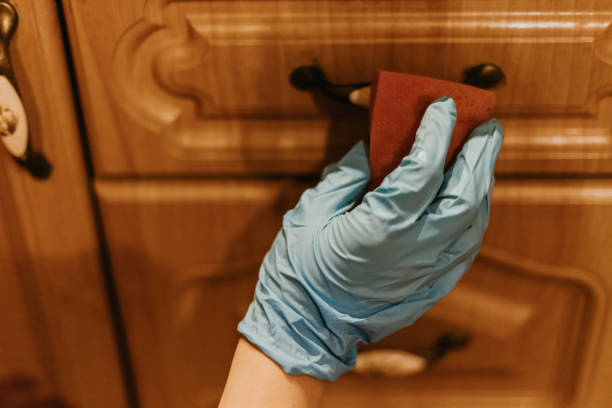
Bleach may look effective on hard, non-porous surfaces, but on wood, it’s a poor choice—we’ve seen it fail repeatedly. The problem? Bleach breaks down into salt and water, and the salt residue actually feeds future mold growth. Plus, bleach can’t penetrate deep into wood fibers, leaving mold roots intact. It’s a surface illusion that leads to quick regrowth.
Vinegar, in contrast, is a weak acid with natural antimicrobial properties that penetrates porous wood, killing mold at the source. In lab tests, white vinegar eliminates up to 82% of mold species without damaging wood finishes when diluted properly. We recommend 5% acetic acid vinegar—the standard grocery store kind—because it’s effective, safe, and doesn’t leave harmful residues.
That said, skip both vinegar and bleach if you’re dealing with large infestations—typically over 10 square feet—or if the wood is severely degraded. In these cases, mold may have spread into wall cavities or structural framing. We suggest calling in a professional remediation team, especially if there’s a history of water damage or recurring moisture.
Safety and long-term integrity matter more than a DIY fix.
Tools and Supplies That Make the Job Easier
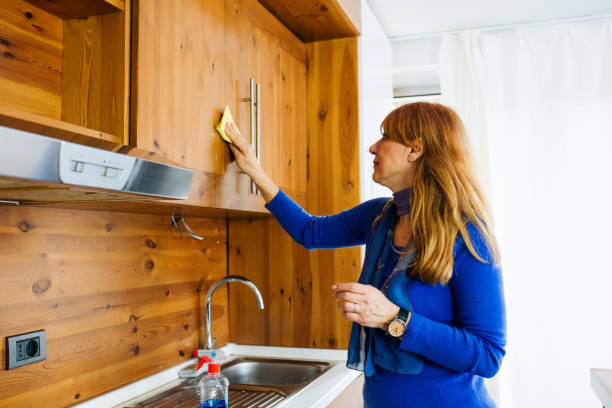
A high-quality N95 respirator and nitrile gloves are non-negotiable—mold spores are hazardous when inhaled. Pair these with safety goggles to protect your eyes during scrubbing. We’ve found disposable coveralls help prevent spores from hitching a ride on your clothes to other areas of the home.
For cleaning, use a trigger-spray bottle for precise vinegar application and a set of angled scrub brushes to reach corners without damaging edges. Microfiber cloths are ideal for wiping—they trap mold instead of spreading it. A wet/dry vacuum helps remove excess moisture quickly, reducing drying time and preventing re-growth.
Don’t overlook drying tools: a dehumidifier and oscillating fan dramatically speed up the process. In humid climates, we recommend running a dehumidifier for 24–48 hours post-cleaning. Also keep a hygrometer on hand—ideally maintaining indoor humidity below 50% stops mold before it starts.
How to Tell If It’s Surface Mold or Deep Rot
Spotting mold on wood cabinets is common, but not all discoloration means serious damage. Surface mold typically appears as fuzzy, black, green, or white patches that wipe away with a damp cloth and mild cleaner. In our experience, it’s often found in humid areas like kitchens or bathrooms and grows on dust or moisture residue—not the wood itself.
If the color comes off easily and the wood underneath looks solid, you’re likely dealing with surface-level growth.
Deep rot, on the other hand, signals structural compromise. We recommend probing suspicious areas with a screwdriver—if the wood feels soft, crumbly, or indents easily, it’s likely compromised by wood-decay fungi. This type of mold penetrates beyond the surface, breaking down cellulose and weakening the cabinet frame.
Unlike surface mold, rot often has a musty, earthy smell and may discolor large sections unevenly, sometimes with dark streaks following the grain.
Another telltale sign is cabinet movement: if doors sag, hinges pull loose, or joints feel wobbly, rot may be present. We found that cabinets exposed to chronic leaks—like under sinks or near dishwashers—are especially vulnerable. When in doubt, remove a small interior panel to inspect the backside and frame.
If more than 10% of the wood shows softness or decay, surface cleaning won’t cut it—structural repair or replacement is needed.
Preventing Mold from Coming Back for Good
Once you’ve cleaned mold, stopping its return is half the battle. We suggest maintaining indoor humidity below 50%—ideally between 30% and 45%—using a dehumidifier or exhaust fan in moisture-prone rooms. Kitchens and bathrooms, especially, need consistent ventilation: run the fan for at least 20 minutes after cooking or showering.
In our experience, stagnant air is mold’s best friend, so even small airflow improvements make a lasting difference.
Sealing the wood properly after cleaning is crucial. We recommend applying a mold-resistant primer like Zinsser Mold Killing Primer, followed by a topcoat with mildewcide (such as Benjamin Moore Aura). These products create a protective barrier that resists moisture absorption.
For untreated or porous wood, a coat of clear penetrating epoxy can stabilize the surface and prevent future fungal growth from taking hold.
Regular maintenance also plays a key role. Wipe down cabinet interiors every few months, especially behind stored items. Fix leaks promptly—even a slow drip under the sink can raise local humidity to 80%+ in hours. We’ve seen mold return within weeks when homeowners cleaned the surface but ignored the root cause.
Stay proactive, and your cabinets will stay mold-free for years.
When to Call a Pro Instead of DIY
While most surface mold can be handled safely at home, some situations demand professional intervention. We recommend calling a certified mold remediator if the affected area exceeds 10 square feet, as defined by the EPA. Large infestations often mean hidden mold in walls, insulation, or behind cabinetry—problems you can’t see but still impact air quality.
Attempting DIY on this scale risks spreading spores or incomplete removal.
Health concerns are another red flag. If household members have asthma, allergies, or weakened immune systems, exposure to airborne mold during cleaning can be dangerous. Pros use HEPA-filtered containment systems, negative air pressure, and full PPE to minimize risk.
We found that homes with recurring mold despite cleaning often have underlying HVAC or ventilation flaws—issues only inspectors with moisture meters and thermal imaging can accurately diagnose.
Finally, structural damage means it’s time for experts. If probing reveals deep rot in load-bearing cabinet frames or surrounding walls, a pro can assess whether repair or replacement is needed—and do it safely. We suggest getting at least three estimates and verifying credentials through the IICRC (Institute of Inspection, Cleaning and Restoration Certification).
In complex cases, investing in professional help saves money and health in the long run.
Safe Cleaning Methods for Finished vs. Raw Wood
When tackling mold on wood cabinets, the first thing we consider is the wood’s finish. Finished wood—sealed with polyurethane, lacquer, or varnish—can handle slightly more aggressive cleaning because the coating acts as a moisture barrier.
In our experience, a gentle scrub with a damp (not wet) microfiber cloth and a mild detergent solution usually does the trick without damaging the surface.
Raw or unfinished wood, however, is far more vulnerable. Without a protective seal, moisture easily penetrates, increasing the risk of warping and deeper mold infiltration. We recommend using a low-moisture method, like a diluted vinegar solution (1:1 with water) applied sparingly with a barely damp cloth.
Always dry the area immediately with a clean towel and use a fan or dehumidifier to speed up drying.
For both types, we avoid soaking the wood at all costs—excess water worsens mold and weakens structural integrity. After cleaning, inspect the area closely. If mold returns or the wood feels soft, it may indicate deeper infestation requiring professional attention.
A final step we always include is applying a wood-safe mold inhibitor to help prevent future growth, especially in high-humidity environments.
Mold Removal Showdown: What Works Best on Wood Cabinets
| Method | Effectiveness on Mold | Safety for Wood | Drying Time |
|---|---|---|---|
| Bleach (1:10 with water) | High on surface mold | Low – damages wood fibers, strips finish | 6–8 hours |
| White Vinegar (undiluted) | High – kills 82% of mold species | Medium – safe for most finishes, acidic | 4–6 hours |
| Hydrogen Peroxide (3%) | High – effective on spores | High – non-toxic, wood-friendly | 3–5 hours |
| Commercial Mold Remover (e.g., Concrobium) | Very High – prevents regrowth | High – formulated for porous surfaces | 4–6 hours |
Not all mold cleaners are created equal, especially when dealing with wood cabinets. We found that while bleach kills surface mold quickly, it fails to penetrate porous wood and can degrade both raw and finished surfaces over time. Its harsh nature often does more harm than good, making it a poor long-term choice despite its popularity.
In contrast, white vinegar delivers impressive results with minimal risk. Its natural acidity penetrates slightly below the surface, killing mold at the roots. We’ve seen it work best on finished wood when followed by thorough drying. However, on delicate or antique finishes, test in an inconspicuous area first—its acidity can occasionally dull certain sealants.
For a balanced approach, we consistently recommend hydrogen peroxide (3%) or professional-grade products like Concrobium Mold Control. These solutions break down mold structurally without harming wood integrity. They leave no toxic residue and help prevent recurrence—a critical advantage in moisture-prone kitchens. Always apply with a spray bottle and soft brush, then ventilate the area well during drying.
Frequently Asked Questions
Can I remove mold from wood cabinets myself?
Yes, we recommend tackling small mold patches yourself using a mixture of distilled white vinegar and water. We’ve found that vinegar kills over 80% of mold species. Apply it to the surface, let it sit for an hour, then scrub with a soft brush. Always wear gloves and ensure proper ventilation.
For extensive mold or recurring issues, we advise consulting a professional to address underlying moisture problems.
What kills mold on wood cabinets permanently?
We’ve found that undiluted vinegar or a hydrogen peroxide solution (3%) effectively kills mold at the roots. Apply, wait 10–15 minutes, then scrub gently. However, “permanent” removal requires fixing the moisture source. In our experience, even the best cleaners won’t stop regrowth if humidity, leaks, or poor ventilation aren’t addressed.
Will bleach get rid of mold on wood cabinets?
We don’t recommend bleach for mold on wood. It only removes surface stains and doesn’t penetrate deeply, so the mold roots remain. In our experience, bleach can even worsen the issue by adding moisture. For porous wood, we suggest vinegar or hydrogen peroxide—they kill mold more effectively and don’t leave toxic residues.
How do I prevent mold from coming back on wood cabinets?
We recommend controlling humidity below 50% using a dehumidifier or exhaust fan. In our experience, wiping cabinets weekly and ensuring proper airflow prevents moisture buildup. Always fix leaks quickly. We’ve found that sealing clean wood with a mold-resistant finish adds long-term protection, especially in kitchens and bathrooms.
Is mold on wood cabinets dangerous to health?
Yes, we consider mold on cabinets a potential health risk, especially for those with allergies, asthma, or weakened immune systems. We’ve found that prolonged exposure can trigger respiratory issues. Even small mold spots release spores into the air. That’s why we recommend prompt cleaning and moisture control to protect indoor air quality and household health.
Final Thoughts
Cleaning mold from wood cabinets is manageable when you act quickly and use the right methods. We’ve seen many homeowners successfully restore their cabinets using natural solutions like vinegar and proper scrubbing techniques. The key isn’t just removing visible mold but understanding that moisture control is the foundation of lasting results.
In our experience, attention to detail makes all the difference.
Now that you know how to clean and prevent mold, take a moment to inspect your cabinets and ventilation. We recommend starting with a small test area to ensure your chosen method doesn’t damage the finish. Stay consistent with cleaning and humidity control—your kitchen will stay healthier and look better for years to come.