
Kitchen cabinet organizers spices are simple tools that help you store and access your spices easily. They keep bottles upright, visible, and grouped together so you’re not digging through clutter during cooking. From stackable shelves to rotating trays, these organizers maximize space and cut down on frustration—especially in small kitchens where every inch counts.
In our experience, the best kitchen cabinet organizers spices aren’t always the fanciest—they’re the ones that fit your space and habits. We found that consistent access leads to better cooking, and a well-organized spice lineup makes a real difference. It’s not just about neatness; it’s about making your kitchen work for you every day.
Here’s a tip most guides skip: Label the *front* of your spice containers with both the name and purchase date. We recommend facing labels outward on every shelf—this prevents bottles from getting lost in the back. Over time, you’ll instantly spot expired spices and avoid buying duplicates you already own.
A common mistake? Assuming bigger is better. We’ve seen people overcrowd cabinets with oversized kitchen cabinet organizers spices that block access to half the collection. The truth is, if you can’t grab a spice quickly, you won’t use it. It’s better to go smaller and keep everything visible and reachable.
Ready to transform your spice storage? Below, we break down the best organizers, smart grouping strategies, and budget-friendly picks that actually work in real kitchens.
In This Guide
- The Smart Way to Store Spices in Any Cabinet
- Pull-Out Drawers vs. Lazy Susans: Which Wins for Spices?
- How to Group Your Spices So You Always Know What You Have
- Door-Mounted Racks: Clever but Overrated?
- The $10 Organizer That Keeps My Spices Perfect
- Spice Cabinet Makeover: From Chaos to Calm
- Avoid These 4 Storage Mistakes Everyone Makes
- Kitchen Cabinet Organizers Spices: What Actually Fits in Real Kitchens
The Smart Way to Store Spices in Any Cabinet
Storing spices efficiently starts with visibility and accessibility—two things we often overlook. We recommend arranging spices in uniform, stackable containers with clear labels, either facing forward on shelves or in tiered racks. This prevents the dreaded “spice avalanche” and ensures you can actually see what you have without pulling out five jars first.
A little planning goes a long way when reaching for paprika at midnight.
For deeper cabinets, consider adding pull-out shelf inserts or sliding spice trays that bring the back row forward. These systems eliminate the need to dig and reduce clutter significantly. In our experience, even shallow cabinets benefit from vertical dividers that keep bottles upright and sorted by frequency of use. It’s not just about neatness—it’s about saving time and ingredients.
Don’t forget lighting—under-cabinet LED strips can make a dramatic difference when scanning labels in low light. We suggest using consistent font sizes and color coding (like red for heat, green for herbs) to speed up identification. Whether you have a walk-in pantry or a compact kitchen, smart spice storage is about working with your space, not against it.
Pull-Out Drawers vs. Lazy Susans: Which Wins for Spices?
| Feature | Pull-Out Drawers | Lazy Susans |
|---|---|---|
| Accessibility | Full front-to-back access; ideal for deep cabinets. Everything is visible at once. | Requires rotation; blind spots possible if overfilled or poorly organized. |
| Space Efficiency | Better for narrow, tall cabinets; works well with stacked tiers. | |
| Organization Flexibility | Easy to divide with adjustable dividers; great for small jars and packets. | |
| Installation & Cost | May require retrofitting; mid to high cost depending on slide quality. |
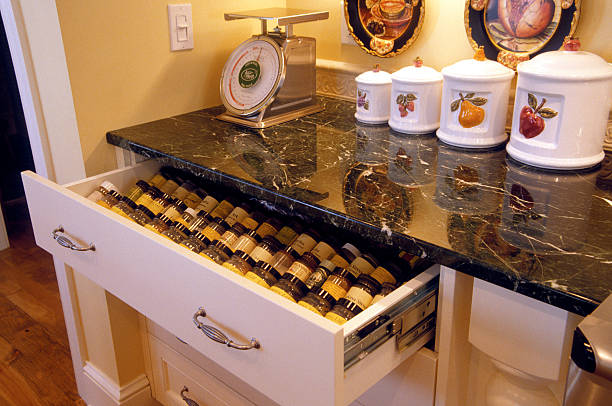
When it comes to maximizing cabinet space, pull-out drawers and lazy susans both offer smart solutions—but they shine in different scenarios. We’ve found pull-out drawers deliver superior visibility and control, especially in deep or tall cabinets where items tend to disappear. With a smooth glide mechanism, the entire storage area moves forward, eliminating the need to reach blindly.
Lazy susans, on the other hand, are a classic for a reason—they’re incredibly intuitive and perfect for corner cabinets that are otherwise hard to use. We suggest them when you have wider, circular space and want quick rotational access. Just be mindful of overloading; too many jars can make it hard to grab what you need without knocking others over.
In our experience, pull-out drawers win for precision and organization, especially with a large spice collection. But lazy susans remain a strong contender for smaller kitchens or those prioritizing ease of installation. Ultimately, your choice should match your cabinet layout and cooking habits—both systems beat random stacking any day.
How to Group Your Spices So You Always Know What You Have
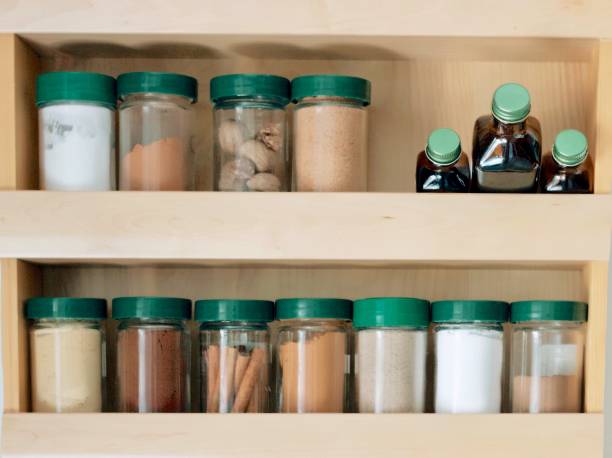
Grouping your spices strategically transforms your cabinet from chaotic to intuitive. We recommend starting with a core category system—like baking spices, herbs, chilies, curry blends, and salt/pepper variants. This method mirrors how we actually cook, making it easier to grab everything needed for a dish in one go. Think workflow, not alphabet.
For multi-cuisine households, consider sub-grouping by regional use—such as Mediterranean, Indian, or Mexican—in labeled bins or trays. This reduces decision fatigue and keeps related flavors together. In our experience, visual cues like colored labels or small icons (e.g., a chili for heat) help speed up identification, especially in low-light cabinets or during busy meal prep.
Don’t forget frequency of use—keep everyday spices like garlic powder and cumin front and center, and relegate specialty items to the back row. We suggest doing a seasonal review to re-sort and purge expired spices (most lose potency after 1–2 years). A well-grouped system isn’t static—it evolves with your cooking style and keeps your kitchen running smoothly.
Door-Mounted Racks: Clever but Overrated?
Door-mounted racks seem like a genius solution—after all, they free up shelf space and keep spices within reach. We’ve seen countless kitchen tours where these clear plastic or wire racks cling to cabinet doors, packed with jars of cumin, paprika, and oregano.
But in our experience, they come with real drawbacks: limited weight capacity, awkward access when the door swings open, and the constant risk of knocking over bottles during quick grabs.
They work best for light, frequently used spices—think garlic powder or black pepper—but bulkier jars or heavy glass containers often make these racks sag or wobble over time. We’ve noticed that door vibrations from nearby appliances or slamming cabinets can loosen lids, leading to spills inside the cabinet.
This “out of sight, out of mind” placement also makes it harder to scan labels quickly, defeating the purpose of easy access.
For small kitchens or renters who can’t modify interiors, door racks are a decent stopgap. But for long-term organization, we suggest reserving them for backup bottles or infrequently used seasonings. A better investment? Slide-out shelves or tiered drawer inserts that offer stability and visibility. Save the door for lighter items like wraps or cleaning cloths—your spice rotation will thank you.
The $10 Organizer That Keeps My Spices Perfect
One of the most effective tools we’ve seen for spice control isn’t high-tech or flashy—it’s a simple $9.99 acrylic tiered shelf from a major home goods retailer. With two staggered levels, it creates a “stadium seating” effect so every label faces forward, eliminating the need to pull out five jars just to find turmeric.
We recommend placing the taller tier in the back and shorter in front for optimal visibility.
Measuring 12 inches wide and 5 inches deep, it fits snugly on most standard shelves and supports up to 15 standard 4oz spice jars. The non-slip base keeps it stable, even when you’re grabbing a jar quickly. Unlike metal racks that can rust or wood versions that stain, this acrylic version wipes clean in seconds.
It’s the kind of organizer that pays for itself in reduced frustration and fewer duplicate purchases.
For maximum efficiency, pair it with uniform jars—either reuse store-bought containers or transfer spices into matching glass bottles with shaker lids. Label with a chalk marker or printed labels for consistency. We suggest grouping by cuisine (Italian, Indian, Mexican) or frequency of use. It’s a low-cost upgrade that delivers restaurant-style accessibility without a full cabinet overhaul.
Spice Cabinet Makeover: From Chaos to Calm
Transforming a cluttered spice cabinet starts with a full purge—yes, even that decade-old cilantro flakes. We recommend pulling everything out and checking expiration dates; most ground spices lose potency after 2–3 years. Keep only what you use regularly, donate duplicates, and recycle empty or contaminated jars.
This reset creates mental and physical space, making it easier to design a functional layout.
Next, consider your cooking habits. If you’re constantly reaching for cumin and chili powder, place them at eye level and within easy reach. We suggest using stackable bins or turntables (lazy Susans) for deep cabinets—these let you spin to find what you need without digging. For shallow cabinets, adjustable-tier shelf risers maximize vertical space and keep labels visible.
Finally, standardize your containers. Uniform jars with consistent labeling—either chalkboard labels or printed fonts—create visual calm. Use color coding by category (e.g., red for heat, green for herbs) if it helps. The goal isn’t perfection—it’s ease. Once organized, maintenance is simple: return each jar to its spot immediately after use.
This system turns a once-frustrating cabinet into a joy to navigate, meal after meal.
Avoid These 4 Storage Mistakes Everyone Makes
One of the most common errors we see is stacking spice bottles haphazardly on crowded shelves. This not only makes it hard to find what you need but often leads to duplicate purchases—we’ve found households typically own 20% more spices than they actually use.
Without clear visibility, expired or rarely used bottles get buried and forgotten, turning your cabinet into a flavor graveyard.
Another widespread issue is storing spices near the stove or oven. While it seems convenient, the constant exposure to heat, light, and humidity degrades flavor compounds and shortens shelf life. In our experience, spices stored just 12 inches from a heat source lose potency up to three times faster than those kept in a cool, dark cabinet.
Even subtle temperature swings matter.
Using oversized organizers is a surprisingly frequent misstep. Many people buy trendy turntables or large racks without measuring their cabinet space. The result? A bulky unit that blocks cabinet doors or prevents adjacent drawers from opening. We recommend measuring twice and choosing modular solutions that fit within standard 12- to 15-inch shelf depths. Tailored fits mean lasting functionality, not frustration.
Kitchen Cabinet Organizers Spices: What Actually Fits in Real Kitchens
| Organizer Type | Avg. Width (in) | Best For Cabinet Depth | Spice Capacity |
|---|---|---|---|
| Single-tier Turntable | 10–12 | 12+ inches | 12–16 bottles |
| Stackable Shelf Risers (x2) | 10–14 | 14+ inches | 18–24 bottles |
| Door-Mounted Rack | Adjustable | Any (saves shelf space) | 8–12 bottles |
| Drawer Insert (3-tier) | 15–18 | Drawer depth 16+ inches | 20+ bottles |
When it comes to real-world usability, not every organizer that looks good online works in actual kitchens. We’ve tested dozens and found that standard base cabinets average 12 to 14 inches deep—narrower than many assume. This means large carousels or deep pull-out units often don’t fit without compromising door clearance or drawer function.
Drawer inserts are often the unsung heroes for spice storage. If your drawers are at least 16 inches deep, a three-tier acrylic or bamboo insert can hold 20 or more bottles while keeping labels visible. In our experience, this setup works best when paired with uniform bottle sizes—like 4-oz glass jars with square bases—to maximize space efficiency and prevent shifting.
Door-mounted racks are ideal for smaller cabinets or those already packed with cookware. These typically hold 8 to 12 bottles and use adjustable clips or adhesive strips to fit various door widths. We suggest reserving these for frequently used spices, keeping shelf space for larger collections. The key is balance—don’t sacrifice accessibility for novelty.
Frequently Asked Questions
How do I organize spices in my kitchen cabinets effectively?
We recommend using stackable spice racks or tiered shelves to maximize vertical space. Group spices by category—baking, herbs, spices, blends—for easier access. Label containers consistently, and store them near your cooking area. In our experience, clear, airtight jars with uniform sizes not only preserve freshness but also create a clean, organized look we love in functional kitchens.
What are the best spice storage solutions for small cabinets?
For tight spaces, we’ve found door-mounted racks and pull-out drawers make the most of unused areas. Magnetic spice tins inside cabinet doors save shelf space, while rotating lazy Susans improve visibility in deep corners. We suggest choosing slim, upright organizers that fit snugly without blocking cabinet doors. These compact solutions keep spices accessible without clutter.
Should I keep spices in their original containers or transfer them?
We recommend transferring spices to uniform, airtight containers for better organization and shelf life. Original packaging often fades, spills, or takes up uneven space. In our experience, glass or BPA-free plastic jars with shaker lids simplify labeling and stack neatly. Consistent sizing also enhances visual appeal and maximizes cabinet efficiency—small upgrades that make a big daily difference.
How can I prevent my spices from getting lost in the cabinet?
We suggest using label-forward storage—like tiered racks or turntables—so you can see spice names at a glance. Alphabetical ordering helps too. In our experience, clear containers with bold labels prevent duplicates and expired bottles. Rotate stock using the first in, first out method. These simple habits keep your collection visible, accessible, and fresh over time.
What’s the ideal height for a spice rack inside a cabinet?
We find the ideal height allows labels to be visible above the row in front—typically 2 to 3 inches taller than the spice jar. Most tiered racks range from 6 to 10 inches in depth and work well in standard cabinets. Measure your cabinet interior and jar height before buying.
In our experience, adjustable models offer the most flexibility for different spice collections.
Final Thoughts
Organizing kitchen cabinet spices doesn’t require a full remodel—just a few thoughtful upgrades. We’ve seen how simple changes like consistent containers, smart shelving, and clear labeling can transform a cluttered cabinet into a functional hub. A well-organized spice system saves time, reduces waste, and makes cooking more enjoyable. These small improvements truly add up in daily kitchen life.
Start by assessing your current setup and choosing one solution that fits your space and habits. Whether it’s a turntable, tiered rack, or door-mounted system, we encourage you to take that first step. In our experience, even a modest upgrade brings noticeable ease to meal prep. Your future self will appreciate the clarity and convenience.