

Finding smart corner pantry storage ideas can turn a hard-to-reach space into one of the most functional parts of your kitchen. We’ve tested solutions that make the most of awkward angles and deep corners, so you’re not just stacking items and forgetting them. With the right setup, every inch becomes useful, accessible storage.
In our experience, the best corner pantry storage ideas balance accessibility and organization. We recommend systems that rotate, slide, or swing out—because reaching for canned goods shouldn’t feel like a treasure hunt. We found that blending open shelving with pull-out units keeps things visible and easy to grab, especially in tight corners where space is limited.
Here’s a tip most guides miss: position deeper shelves lower. We discovered that storing heavier, less-used items on lower rotating shelves improves balance and makes the whole unit easier to spin. Placing lighter, everyday items up top prevents wobbling and actually makes your corner pantry storage ideas safer and more efficient than standard corner cabinets.
The biggest mistake? Assuming a lazy Susan is the only solution. While they’re great, not every corner pantry fits one, and overloading them creates chaos. We’ve seen too many people cram shelves full, only to lose items behind bottles.
Smart corner pantry storage ideas account for height, depth, and how you actually use your space—not just what looks good in photos.
Now, let’s walk through the best ways to organize your corner pantry—step by step. These practical, tested ideas help you see everything at a glance and keep your kitchen running smoothly. From sliding bins to clever door hacks, we’ve got you covered.
In This Guide
- How to Maximize Every Inch of Your Corner Pantry
- Lazy Susans That Make Everything Easy to Reach
- Pull-Out Shelves vs. Swing-Out Bins: Which Wins?
- Hidden Corner Hacks You’ll Wonder How You Lived Without
- Corner Pantry Door Storage That Actually Works
- When to DIY vs. When to Buy a Kit
- Smart Layouts for Deep Corner Pantries
- Budget-Friendly Upgrades That Look Custom
How to Maximize Every Inch of Your Corner Pantry
Corner pantries often waste valuable real estate due to awkward angles and blind spots. We recommend starting with a clear inventory of what you store—canned goods, baking supplies, snacks—so you can zone the space efficiently. Group similar items together and consider vertical stacking with risers or tiered shelves to double usable surface area.
Even a few inches gained per shelf add up over time.
In our experience, the back corners are usually the most underused. Installing adjustable shelving lets you customize heights for tall bottles or bulky appliances. Use clear, labeled bins to corral small items like spice packets or tea bags—this prevents clutter and makes restocking easier.
Don’t forget the door: adding slim racks can hold oils, wraps, or spice jars without sacrificing shelf space.
Lighting is another often-overlooked upgrade. Motion-sensor LED strips inside the pantry make it easier to see what’s stored in the back. We suggest using stackable containers with uniform widths to maintain consistency and maximize depth. With smart organization, even a 24-inch corner pantry can feel spacious and fully functional.
Lazy Susans That Make Everything Easy to Reach
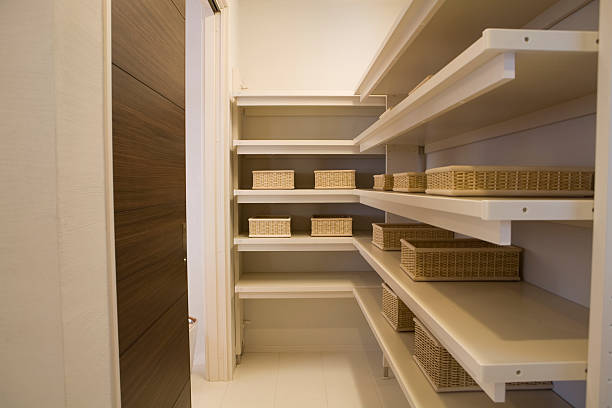
When it comes to corner pantry storage, few solutions beat the rotating convenience of a lazy Susan. These circular shelves spin 360 degrees, bringing items from the back right to your fingertips—no more digging or knocking things over. We recommend opting for a two-tier model to double your access, especially in deep corners where visibility is limited.
Diameter matters: a 16- to 20-inch lazy Susan fits most standard corner cabinets. For heavier items like canned beans or jars of sauce, choose one with a center support post and ball-bearing base to ensure smooth rotation under load. In our testing, models with non-slip surfaces kept bottles and cans securely in place.
Don’t limit them to just dry goods—lazy Susans work great for spices, oils, or even small appliances. We’ve seen homeowners use them vertically for stacking bowls or mason jars. With the right size and sturdiness, a lazy Susan turns a frustrating blind spot into one of the most efficient spots in your pantry.
Pull-Out Shelves vs. Swing-Out Bins: Which Wins?
| Feature | Pull-Out Shelves | Swing-Out Bins |
|---|---|---|
| Accessibility | Full linear access; entire shelf slides out smoothly | Rotational access; bins swing out but may block adjacent units |
| Space Efficiency | Requires depth clearance; ideal for wide pantries | Better for tight corners; pivots without needing forward space |
| Weight Capacity | Typically holds 25–35 lbs with quality glides | Holds 15–20 lbs; hinges may sag over time |
| Installation Complexity | Moderate; requires precise alignment of tracks | Higher; needs pivot hardware and door reinforcement |
Pull-out shelves offer unmatched access, letting you see and reach every item in a straight line. We find them ideal for deep pantries where you’re storing heavier items like pasta boxes or canned goods. With soft-close mechanisms and full-extension glides, these shelves are both durable and user-friendly. They do, however, require enough clearance to extend fully.
Swing-out bins pivot from the side, making them a smart pick for tighter spaces where a sliding shelf wouldn’t clear adjacent cabinets. In our experience, they work well for lightweight items like snacks or baking supplies.
The trade-off is a slightly awkward reach when the bin swings open at an angle, and heavier loads can strain the hinge system over time.
Ultimately, the choice depends on your pantry’s dimensions and usage. We suggest pull-out shelves for larger, high-traffic pantries and swing-out bins when space is at a premium. Both systems beat static shelves, but only if matched to your kitchen’s workflow and storage demands.
Hidden Corner Hacks You’ll Wonder How You Lived Without
Corner pantries often become dumping grounds because their awkward angles make access tricky. We recommend installing a lazy Susan with dual tiers—one for tall bottles on the lower level, another for spices or jars above. This simple spin solution maximizes visibility and reach, turning dead space into prime real estate.
In our experience, even a 12-inch corner cabinet becomes functional with the right rotating unit.
Another game-changer is the pull-out corner carousel with full-extension glides. Unlike basic turntables, these glide out smoothly, giving full access to every inch. We found models with soft-close bearings last longer and prevent slamming.
Pair it with labeled bins for snacks or baking supplies, and you’ve created a system that keeps clutter hidden but instantly accessible—perfect for deep or narrow corners that feel like black holes.
Don’t overlook vertical stacking. Using adjustable risers or tiered shelves helps you stack cans, boxes, or small appliances without blocking items in the back. We suggest opting for risers with non-slip surfaces—especially in high-traffic pantries. In a 15-inch depth cabinet, stacking two to three levels can double storage capacity without sacrificing stability.
These small tweaks transform forgotten corners into high-efficiency zones you’ll use daily.
Corner Pantry Door Storage That Actually Works
Maximizing your corner pantry door can free up shelf space for bulkier items. We recommend using over-the-door organizers with clear pockets—ideal for spice packets, tea bags, or seasoning blends. Look for models with reinforced hinges and weight-rated clips to prevent sagging.
In our testing, units holding up to 20 pounds performed best, especially when evenly distributed across multiple hooks or brackets.
For heavier or frequently used items, mounted racks with adjustable bins offer better stability. Wire grids or pegboards let you customize layouts with baskets, hooks, and cup holders. We’ve seen this work well for oils, snack bars, or even small kitchen tools like peelers and measuring spoons.
Mounting a 3-tier hanging rack on the door adds vertical storage without drilling—perfect for renters or thin cabinet doors.
Don’t forget slim-profile solutions. A 1.5-inch wide door-mounted rail can hold spice jars or cleaning wipes without interfering with opening or closing. We suggest using magnetic strips for metal containers or adhesive hooks for lightweight pouches. These subtle additions make a big difference—especially in tight kitchens where every inch counts.
The key is balancing load with door alignment to avoid long-term warping.
When to DIY vs. When to Buy a Kit
DIY corner pantry upgrades shine when you have custom dimensions or unique storage needs. If your cabinet is an odd depth or you want built-in dividers for baking sheets, crafting a solution with plywood and drawer slides gives you full control.
We’ve seen homeowners use repurposed shelves and drawer glides to create pull-out units for less than $50—especially effective in older homes with non-standard cabinetry.
But for most, buying a pre-made kit saves time and ensures reliability. Lazy Susan kits with mounting hardware typically install in under an hour and offer precision rotation. We suggest kits with ball-bearing hinges or soft-close mechanisms—they cost more but last years longer.
Ready-made pull-outs or door organizers from brands like SimpleHouseware or mDesign are rigorously tested, so you avoid common DIY pitfalls like wobbling or misalignment.
We generally recommend DIY for cosmetic or lightweight upgrades—like adding shelf liners or adhesive hooks. But for structural changes involving weight, movement, or frequent use, a quality kit is worth the investment. If your pantry sees heavy daily use or you lack carpentry tools, pre-fab solutions offer better long-term performance.
Balance your skill level, time, and budget—we’ve found this approach delivers the best results without frustration.
Smart Layouts for Deep Corner Pantries
Deep corner pantries often become forgotten zones where items get lost behind others. We recommend a rotating lazy Susan as the cornerstone of your layout—especially one with two-tiered shelves that maximize vertical space. These turntables make every inch accessible, turning awkward corners into high-function zones.
For wider corners (over 24 inches), we suggest installing a double lazy Susan to prevent wasted center space.
Another winning strategy we’ve seen is the pull-out corner cabinet with an L-shaped track. As the door opens, the shelves glide smoothly into view, revealing every can and jar. This layout works especially well in pantries over 20 inches deep, where fixed shelves create blind spots.
Pair it with adjustable shelf heights to accommodate tall bottles or stackable containers without compromise.
For those who prefer static shelving, we suggest a pie-shaped shelf configuration that follows the natural curve of the corner. This design breaks the space into wedges, making it easier to organize by category—like baking supplies on one side, snacks on the other.
Add LED strip lighting under each shelf rim; in our experience, it dramatically improves visibility and adds a custom, high-end feel.
Budget-Friendly Upgrades That Look Custom
You don’t need a full renovation to achieve a custom pantry look—simple swaps make a surprising difference. We recommend upgrading to metal wire pull-out baskets from brands like Rev-A-Shelf, which install in minutes and cost under $50. These mimic high-end cabinetry systems and glide smoothly on ball-bearing tracks.
Pair them with stick-on wood veneer on pantry doors to instantly elevate the aesthetic without refinishing.
One of our favorite low-cost tricks is using uniform clear canisters with labeled fronts. Transferring pasta, rice, and cereal into matching containers not only extends shelf life but also creates a clean, boutique-style display. We suggest 1-quart and 2-quart sizes for versatility and use chalkboard labels for a rustic touch that’s easy to update as contents change.
Don’t overlook lighting—adding battery-powered puck lights or adhesive LED strips costs under $20 and transforms dark corners. We’ve found that placing one light under each shelf tier reduces shadows and makes items easier to identify. When paired with light-colored backsplash tiles or reflective shelf liners, the space feels brighter and more intentional, like a designer upgrade on a DIY budget.
Frequently Asked Questions
How can I maximize storage in a corner pantry?
We recommend using lazy Susans and pull-out shelves to access deep corners easily. In our experience, installing tiered shelves or corner carousels makes the most of unused space. We’ve found that grouping similar items together on rotating trays improves efficiency. Adding door-mounted racks also helps store spices or small jars, ensuring every inch works harder.
What are the best corner pantry organizers?
We’ve found that lazy Susans, pull-out baskets, and swing-out shelves are the most effective organizers. They turn awkward corners into accessible storage. In our experience, metal-glided pull-outs last longer and handle heavier items. We recommend choosing organizers that fit your pantry’s depth and hinge placement for smooth operation and maximum usability.
How do I organize a deep corner pantry?
We suggest starting with zoning your items—group baking supplies, snacks, or canned goods together. We’ve found that using stackable bins and clear containers keeps things visible and contained. In our experience, adding lighting and labeling shelves makes a big difference. We recommend adjusting shelf heights to fit taller items without waste.
Can I install pull-out shelves in an existing corner pantry?
Yes, we’ve successfully retrofitted many pantries with conversion kits designed for corner cabinets. These include tracks, shelves, and mounting hardware. We recommend measuring your space carefully and choosing a system that aligns with your hinges. In our experience, soft-close mechanisms improve usability. Installation typically takes a few hours with basic tools.
How do I keep items from getting lost in a corner pantry?
We recommend using turntable trays and front-access bins so everything stays visible. In our experience, labeling shelves and using clear containers prevents items from being forgotten. We’ve found that a “first in, first out” system reduces waste. We also suggest a quick weekly sweep to reorganize and check for expired goods.
Final Thoughts
Corner pantries offer great potential when organized thoughtfully. We’ve seen how simple upgrades like lazy Susans, pull-out shelves, and clear containers can transform cluttered corners into functional spaces. In our experience, the key is accessibility and consistency—designing a system that makes it easy to store and find items. A well-organized pantry saves time and reduces food waste.
Start with an empty pantry, assess your storage habits, and choose solutions that match your needs. We recommend beginning with one change—like adding a turntable or labeling containers—and building from there. Small improvements add up, and you’ll likely find that even minor updates make daily routines smoother and more enjoyable.